Founder President of All India Sai Samaj - Shri B. V. Narasimha Swamiji (1874–1956): The Great Apostle of Shirdi Sai Baba

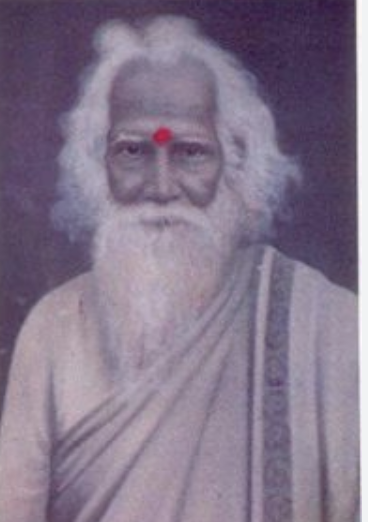
His Holiness Shri B. V. Narasimha Swamiji was one of the greatest apostles of Shirdi Sai Baba, and the divine instrument through whom Baba’s name, message, and leelas spread across India - especially South India. At a time when Sai Baba was known only within a small region around Shirdi, Swamiji transformed the Sai movement into a national - and eventually global - phenomenon.
He is rightly revered as the “Great Apostle of Sai Baba,” for he not only discovered Sai Baba for himself but presented Him to the world through tireless effort, deep devotion, and monumental literary work.
Early Life and Public Service
Shri B. V. Narasimha Swamiji was born on 21 August 1874 at Bhavani in Coimbatore district, Tamil Nadu, to Shri B. Venkatagiri Iyer and Smt. Angachi Ammal. From a young age, he displayed exceptional intelligence, discipline, and a deep inclination toward both learning and spirituality.
He pursued his formal education in Salem and Madras, earning degrees in Arts and Law, and began his legal practice in Salem in 1895. His brilliance as a lawyer, coupled with his eloquence and sharp analytical ability, quickly brought him success and recognition. Yet, what set him apart was his strong moral compass and compassion for society - he often resolved disputes through arbitration, sparing the poor from the burden of prolonged litigation, and rendered his services free of cost to those in need.
Alongside his professional excellence, Swamiji was also a profound spiritual scholar. He was deeply learned in the Vedas and well-versed in sacred texts such as the Srimad Bhagavatam, the Bhagavad Gita, and the Ramayana. His intellectual curiosity and spiritual openness also led him to study the Bible, reflecting his broad and inclusive understanding of religion and philosophy. This wide scriptural foundation later enabled him to appreciate and present the universal message of Shirdi Sai Baba, which transcends all religious boundaries.
His growing reputation and commitment to public welfare led him to become Chairman of the Salem Municipality, where he earned widespread respect for his integrity and service-minded leadership. He was also actively engaged in the political life of the country. A follower of Bal Gangadhar Tilak, he was elected to the Madras Legislative Council in 1912 and served until 1920. Notably, he was among the first to address the Council in a regional language. He also participated in the Home Rule Movement led by Annie Besant, and was part of the delegation that traveled to Britain in 1917 to advocate India's cause.
Despite his success, wealth, and respected social standing, Swamiji remained inwardly inclined toward higher spiritual truths - a seed that would later blossom into complete renunciation and divine service.
In 1921, a devastating tragedy struck when two of his children drowned in a well. This profound loss deeply affected Swamiji, and marked a turning point in his life. Gradually, he withdrew from his flourishing career and public life, developing detachment from worldly pursuits.
By 1925, he renounced worldly life and set out in search of his Sadguru.
During his intense spiritual quest, Shri B. V. Narasimha Swamiji came into contact with several great saints and spiritual masters of the time, each contributing in some way to his inner evolution and ultimately guiding him toward his destined Sadguru.
On the advice of Jagadguru H.H. Narasimha Bharati, he visited Ramana Maharshi at Tiruvannamalai. There, Swamiji spent nearly three years in silence, contemplation, and deep study of Vedanta. During this period, he authored the renowned English biography Self-Realisation, which played a significant role in introducing Ramana Maharshi to seekers not only across India but also in Europe and America.
Continuing his spiritual journey, Swamiji visited Pandharpur, where he worshipped Lord Vitthal, immersing himself in the devotional tradition associated with the great bhakti saints.
He then proceeded to Khedgaon near Poona, where he had darshan of Narayan Maharaj, a revered spiritual master known for his royal yet deeply devotional approach to spirituality. It was here that Swamiji received further encouragement in his quest for spiritual realization.
From there, he traveled to Meherabad near Ahmednagar, where he spent some time with Meher Baba, absorbing the atmosphere of silence and inwardness that characterized Meher Baba's presence.
His journey then led him to Sakori, where he met Upasani Maharaj, one of the foremost disciples of Shirdi Sai Baba. Swamiji stayed with Upasani Maharaj for some time, and through these interactions, he developed a deep reverence for him. He later authored the book Sage of Sakori, paying tribute to Upasani Maharaj's spiritual stature and his role in carrying forward Sai Baba's message.
Swamiji's association with Upasani Maharaj proved to be a crucial turning point. It was during this time that he heard in greater depth about Sai Baba of Shirdi. A powerful thought arose within him: if Upasani Maharaj himself was such a great saint, then his Guru - Sai Baba - must be an even greater spiritual force.
With this conviction, and with the blessings of Upasani Maharaj, Swamiji was inwardly guided toward Shirdi - toward the moment that would transform his life forever.
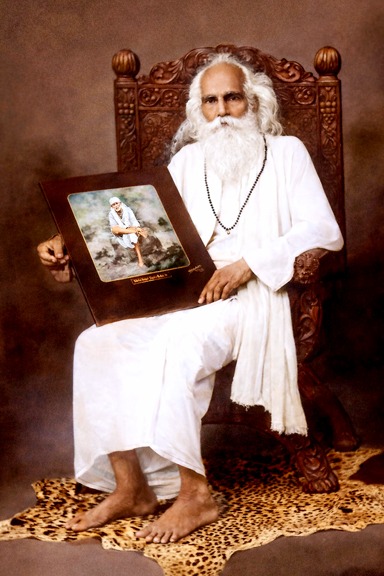
On 29 August 1936, Shri B. V. Narasimha Swamiji set foot in Shirdi and stood before the Samadhi of Shirdi Sai Baba. What unfolded in that silent moment was not merely a spiritual experience, but a life-defining revelation.
As he gazed upon the Samadhi, he was filled with an indescribable sense of peace, bliss, and divine presence. In that profound stillness, he felt that Sai Baba was communicating with him in eloquent silence, bestowing upon him more spiritual grace than he could contain. In that sacred encounter, he recognized Sai Baba as his Sadguru.
But what distinguished Swamiji was not just the experience itself - it was what followed.
The overwhelming bliss he experienced did not remain a personal treasure. Instead, it stirred within him a deep and compassionate resolve: that every human being should experience the same peace and spiritual fulfillment that he had received in the Samadhi Mandir. This noble and selfless aspiration became the very mission of his life.
From that moment onward, Swamiji dedicated himself entirely to taking Sai Baba's message to the world - especially to South India, where Baba was largely unknown. He resolved to travel tirelessly, meet devotees, gather authentic accounts, and spread Baba's teachings far and wide.
This mission, however, was not without challenges
Swamiji sacrificed his personal comfort and health, enduring physical strain from continuous travel and relentless work. He faced criticism, skepticism, and opposition, particularly from those who did not understand or accept Sai Baba’s universal message that transcended caste, creed, and religious boundaries. There were also financial constraints and logistical difficulties, as he worked to establish institutions, publish books, and organize gatherings.
Yet, none of these obstacles deterred him.
With unwavering faith in Sai Baba and steadfast determination, he persevered through every hardship. His life became a shining example of total surrender, service, and spiritual conviction. What began as a moment of divine realization at the Samadhi Mandir blossomed into a nationwide movement, bringing Sai Baba into the hearts and homes of countless devotees.
Thus, the discovery of his Sadguru was not the culmination of his journey - but the beginning of a lifelong mission, driven by compassion, sustained by faith, and fulfilled through tireless service.
When Shri B. V. Narasimha Swamiji recognized Shirdi Sai Baba as his Sadguru, he also realized that the world knew very little about the true nature of Baba's life, teachings, and divine leelas. Many of Baba's direct devotees were still alive at that time, and Swamiji felt an urgent responsibility to preserve their experiences before they were lost forever.
What followed was an extraordinary and painstaking effort - nothing short of a spiritual mission in itself.
Swamiji set out to meet every possible devotee who had the blessed opportunity to see, interact with, and experience Sai Baba during His lifetime. This was not an easy undertaking. Many of these devotees lived in remote and interior villages, often difficult to access in those days. Travel was slow and physically demanding, and there were significant language barriers, as most of the devotees spoke Marathi while Swamiji's native language was Tamil.
Yet, none of these challenges deterred him.
With unwavering determination, Swamiji learned Marathi sufficiently to communicate, read original texts, and understand the nuances of devotees' experiences. He traveled extensively across Maharashtra and other regions, seeking out elderly devotees, patiently listening to their accounts, and carefully verifying the details.
He met and interacted with a remarkable number of Baba's direct devotees, including Shama (Madhavrao Deshpande), Tatya Patil, Abdul Baba, Laxmibai Shinde, Das Ganu Maharaj, and many others. He also reached out to devotees living in different parts of the country, ensuring that no authentic experience was overlooked.
Each meeting required patience, humility, and perseverance. Swamiji would sit with the devotees for long hours, encouraging them to recollect and narrate their experiences in detail. He did not merely record stories - he cross-checked facts, compared accounts, and ensured authenticity, bringing a rare level of rigor to spiritual documentation.
Despite physical strain, logistical difficulties, and financial constraints, he continued this work relentlessly, driven by the conviction that these firsthand accounts were invaluable spiritual treasures for future generations.
The result of these tireless efforts was a rich and authentic body of material that later took shape in his publications, especially Devotees’ Experiences of Sri Sai Baba and his monumental Life of Sri Sai Baba. Through these works, Swamiji ensured that the living presence of Sai Baba, as experienced by His devotees, would continue to inspire seekers across time.
In this way, Swamiji did not merely write history - he preserved the living voice of devotion, overcoming every barrier to ensure that the world could know Sai Baba as He truly was.
Having resolved that the bliss he experienced in Shirdi must reach every seeker, Shri B. V. Narasimha Swamiji embarked on an extraordinary mission to spread the message of Shirdi Sai Baba across the length and breadth of India.
This was not a casual effort - it was a lifelong tapas (spiritual austerity) expressed through action.
At a time when communication and travel were difficult, Swamiji undertook extensive tours across towns and villages, often under physically demanding conditions. He learned Marathi to access original sources, met elderly devotees who had personally interacted with Sai Baba, and painstakingly recorded their experiences. He interviewed more than sixty such devotees, ensuring that their authentic accounts would not be lost to time.
His writings in the Sunday Times (Madras) between 1936 and 1939 reached thousands of readers and ignited curiosity and devotion among people who had never even heard of Sai Baba. These articles became the foundation for a nationwide awakening.
Swamiji worked relentlessly, often at the expense of his health, driven by an inner conviction that he was carrying out Baba’s will. He faced criticism and resistance, especially from those who questioned the need to propagate a saint from a distant region or misunderstood Sai Baba’s universal teachings. Financial constraints and organizational challenges were constant companions.
Still, he pressed on - undaunted.
With unshakeable faith and extraordinary perseverance, he transformed what was once a small, localized devotion into a vibrant and growing spiritual movement. Streams of devotees began to flow to Shirdi, and Sai Baba’s name started echoing in homes across South India.
As the wave of devotion to Shirdi Sai Baba began to spread through his tireless efforts, Shri B. V. Narasimha Swamiji recognized the need for a dedicated and organized institution to sustain and nurture the growing Sai movement in South India. This vision led to the founding of the All India Sai Samaj in 1940 in Mylapore, Madras.
The early years of the Samaj were marked by significant challenges, particularly in securing a permanent place. The Samaj functioned from several temporary premises, moving from one location to another due to limitations of space and resources. Despite these uncertainties, Swamiji remained steadfast, guided by his unshakable faith that Sai Baba's work would find firm footing in time.
It was through Swamiji's powerful and inspiring lectures that the movement began to gain strength. His words, filled with conviction and spiritual authority, touched the hearts of listeners and inspired many to become devotees of Sai Baba. Moved by devotion, people began to offer voluntary contributions, supporting the growth of the Samaj .
Equally important was the role of his Sai literature, which carried Baba's message far and wide. The sale and distribution of these publications not only spread awareness but also helped generate the resources needed to sustain the Samaj . Through a combination of devotee contributions and literary efforts, the Samaj was eventually able to secure a permanent place in Mylapore - marking a major milestone in its journey.
With a stable foundation in place, Swamiji expanded the activities of the Samaj into a vibrant and dynamic spiritual center. He initiated several key efforts that became the backbone of Sai devotion in South India:
- The launch of the monthly journal 'Sai Sudha', published in multiple languages to reach a wider audience
- The organized celebration of major Sai festivals such as Sri Ramanavami, Guru Purnima, and Baba's Mahasamadhi Day, following the traditions of Shirdi
- The free distribution of Sai Baba's photographs along with Udi (sacred ash), helping devotees establish a personal connection with Baba
- Social service initiatives, including a free dispensary for the poor, as well as the establishment of a library and educational efforts for the benefit of the community
Through these initiatives, the All India Sai Samaj became not just a place of worship, but a center of spiritual learning, devotion, and service.
The journey from uncertain beginnings in temporary spaces to a permanent and flourishing institution stands as a powerful testament to Swamiji's faith, perseverance, and selfless dedication. Today, the Samaj continues to serve as a living embodiment of his vision - carrying forward the message, mission, and compassion of Sai Baba to countless devotees.
To give a powerful and organized impetus to the Sai movement, Shri B. V. Narasimha Swamiji envisioned the need for a national platform where devotees from across the country could gather, share experiences, and deepen their understanding of Shirdi Sai Baba. This vision led to the historic institution of the All India Sai Devotees' Convention.
The First All India Sai Devotees' Convention was held over four days in May 1946 in Mylapore, Madras. This landmark event brought together more than two hundred delegates and devotees from different parts of India, marking one of the earliest organized national gatherings dedicated exclusively to Sai Baba.
What made this convention particularly significant was the presence of individuals closely connected with Sai Baba's lifetime. Among them was Sri Martand, the son of the revered Mhalsapati, one of Baba's closest devotees in Shirdi. Along with him, several early devotees and followers, including Sri Kesavaiahji of Shenoy Nagar and many others, participated in the gathering.
A central feature of the convention was the sharing of firsthand spiritual experiences. Devotees narrated how Sai Baba had guided, protected, and transformed their lives - both materially and spiritually. These deeply moving testimonies reinforced faith among attendees and created a living bridge between Baba's physical lifetime and future generations of devotees.
The convention also served several larger purposes:
- It unified devotees across regions, languages, and backgrounds, fostering a sense of national spiritual fellowship
- It provided a structured forum for Sai prachar (propagation), ensuring that Baba's message was communicated in an organized and sustained manner
- It encouraged the documentation and preservation of authentic experiences, many of which later contributed to Swamiji's publications
- It helped establish common modes of worship and observance, strengthening the identity of the Sai movement across India
Following the success of the first convention, similar gatherings were held in subsequent years, gradually expanding in scale and influence. These conventions played a crucial role in transforming the Sai movement from a scattered devotional following into a cohesive, pan-Indian spiritual movement.
Through these conventions, Swamiji not only spread awareness about Sai Baba but also created a living community of devotees, bound by shared faith and collective spiritual experience.
Swamiji understood that for Sai Baba's message to endure beyond his lifetime, it had to be documented, preserved, and made accessible to all. His writings were not merely books - they were instruments of transformation.
With remarkable dedication, he gathered firsthand accounts, verified facts, and presented Sai Baba's life and teachings in a structured and compelling manner. His works combined devotion, scholarship, and clarity, making them accessible to both seekers and scholars.
His extensive body of work includes:
- Shri Sai Baba of Shirdi - A brief statement
- Who is Shri Sai Baba of Shirdi (1939)
- Is Sai Baba living and helping now
- Wondrous Saint Sai Baba
- Shri Sai Baba's Charters and Sayings
- Gospel of Sri Sai Baba
- Life of Sri Sai Baba (in multiple volumes – his magnum opus)
- Devotees' Experiences of Sri Sai Baba (English & Tamil, 1940–41)
- Glimpses of Sai Baba (1945)
- Sri Sai Charita Natakam (Tamil play, 1944)
- Sri Sai Harikatha (for musical discourse)
- Sage of Sakori (on Upasani Maharaj)
In addition, he composed:
- Sri Sainath Smaranam (Sanskrit hymns)
- Sri Sainatha Pooja Vidhi
- Sri Sai Sahasranamam
- Sri Sai Ashtotara Shata Namavali
These works were published in multiple Indian languages, including Sanskrit, Tamil, Telugu, and Kannada, ensuring that Sai Baba's message reached people across linguistic and cultural boundaries.
What makes his contribution even more remarkable is that he claimed no copyright over his publications. His sole intention was the widest possible dissemination of Sai Baba's teachings. In doing so, he laid the intellectual and devotional foundation upon which the Sai movement continues to thrive today.
When Shri B. V. Narasimha Swamiji first visited Shirdi in 1936, it was a quiet village with very few visitors to the Samadhi of Shirdi Sai Baba. Though the spiritual presence was profound, the world had yet to awaken to Baba's greatness.
Swamiji felt deeply that such divine grace should not remain confined to one place - it had to reach every home and every heart.
With this conviction, he undertook an extraordinary mission of Sai Prachar at the grassroots level, especially across South India. His approach was simple, direct, and deeply compassionate.
He traveled extensively - often on foot - visiting even the smallest and most remote villages, carrying with him a humble photograph of Sai Baba. Gathering the local people, he would speak about Baba's life, His miracles, and His universal message of compassion and protection.
More importantly, Swamiji connected with people at a deeply human level.
He would listen patiently to their difficulties - illnesses, poverty, family troubles, and fears - and with complete faith, he would seek Sai Baba's grace on their behalf, often offering Udi and prayers. Through this, people began not only to hear about Baba, but to experience His living presence.
One such incident beautifully illustrates how entire communities were transformed.
Once, during his visit to a village near Vellore, a ten-month-old child was brought to him. The child had been suffering from severe fits for nearly eight months, and its chances of survival appeared very bleak. The anxious villagers pleaded with Swamiji to bless the child.
Moved by compassion, Swamiji took some Udi of Sai Baba, applied it to the child, and said with complete faith, "By Baba's Grace, this child will never again have fits."
From that very moment, the child was completely cured and never suffered from fits again.
For the villagers, this was not merely an event - it was a direct experience of Sai Baba's grace. What they witnessed transformed their faith entirely. The whole village, moved by this miracle, became devoted to Sai Baba.
Such incidents were not isolated.
Across villages, similar experiences - of relief, healing, and inner peace - created unshakable faith among people. Swamiji's method was not to convince through argument, but to awaken devotion through experience.
- He reached people personally
- He spoke to their hearts
- He invoked Baba's grace in their lives
- And he transformed their struggles into faith
Through these tireless efforts, village after village embraced Sai Baba. What began as small gatherings gradually blossomed into centers of devotion, eventually leading to a steady stream of pilgrims to Shirdi.
Thus, Shirdi, once a quiet and little-known village, grew into a vibrant spiritual center - not merely through publicity, but through the lived experiences of countless devotees whose lives were touched by Baba's grace through Swamiji.
Swamiji's Sai Prachar was not just a mission - it was an expression of his boundless compassion and his unwavering resolve that every human being should experience the same peace, protection, and divine grace that he had received at the Samadhi Mandir.
Even as his body grew weak, Swamiji's spirit remained unshaken. After a serious fall in 1953, his health deteriorated significantly. Yet, instead of withdrawing from his mission, he intensified his efforts. Determined to complete his magnum opus, Life of Sri Sai Baba, he continued dictating and guiding publications with the help of a stenographer.
Confined to bed in his final months, he continued his pracharak work from his sickbed, ever immersed in the remembrance of Shirdi Sai Baba.
On 19 October 1956, he attained Mahasamadhi, merging with his beloved Sadguru. His passing marked not an end, but the culmination of a life wholly dedicated to divine service.
In recognition of his unparalleled service, his portrait was installed in the Samadhi Mandir along with those of other ardent devotees on 26th January, 1966 by Justice M. B. Rege - an enduring tribute to his role in spreading Sai Baba's message.
His life remains a shining example of devotion, sacrifice, scholarship, and service. If today Sai Baba is known in nearly every town and city in India, it is largely due to the relentless efforts of Shri Narasimha Swamiji.
Shri B. V. Narasimha Swamiji's life is a testament to what one individual, driven by faith and compassion, can achieve. He transformed personal spiritual experience into a collective movement, overcame immense challenges with courage, and left behind a legacy that continues to guide millions. If today Sai Baba is known in nearly every town and city of India, and increasingly across the world, it is largely due to the unparalleled zeal, sacrifice, and vision of His Holiness Shri Narasimha Swamiji. He did not merely preach Shri Sai Baba- he made the world experience Him.