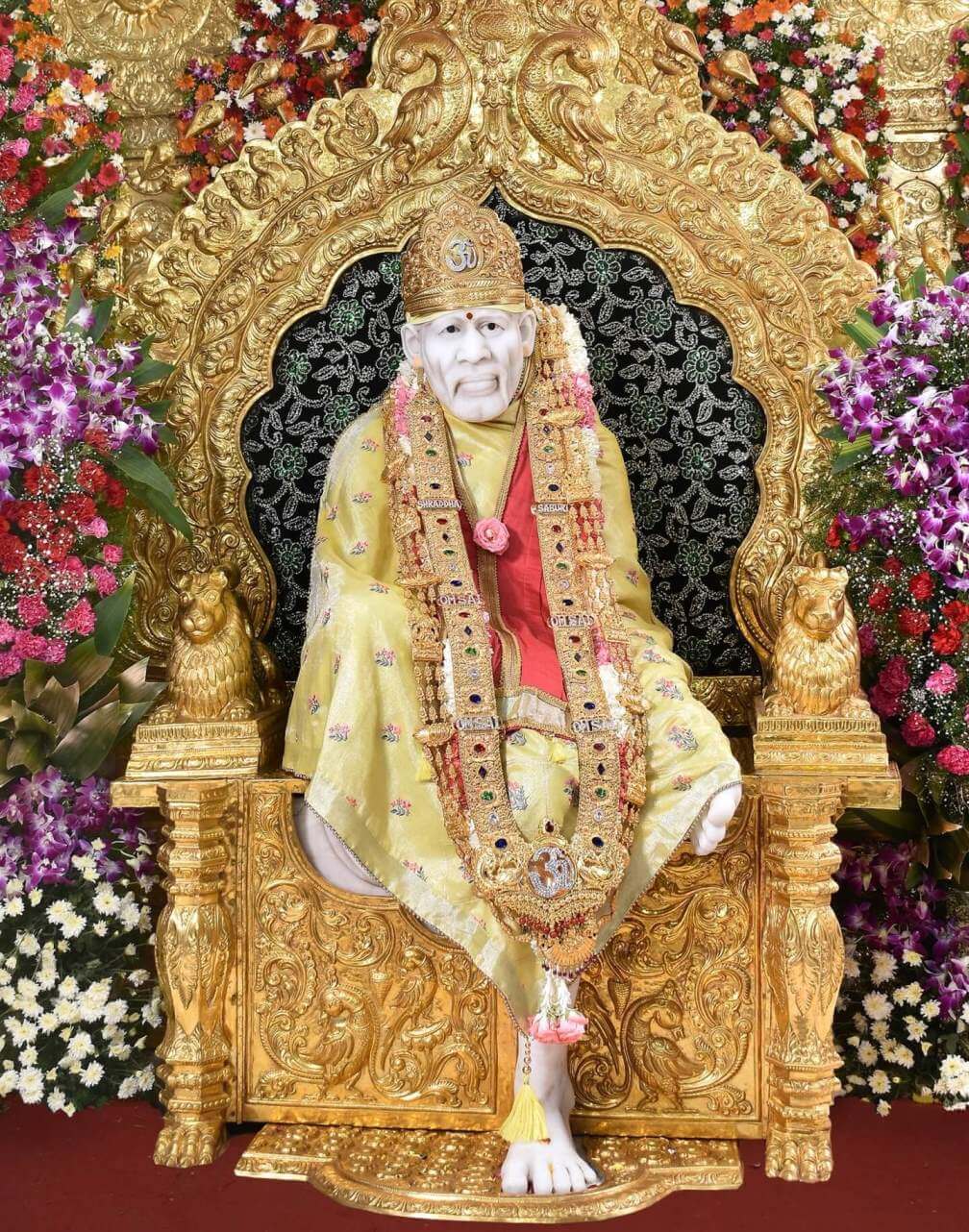
Main Sannidhi
The Main Sannidhi of the All India Sai Samaj is deeply evocative of the Samadhi Mandir at Shirdi, where the sacred mortal remains of Shri Shirdi Sai Baba were interred. For pilgrims visiting Shirdi, darshan at Baba’s Samadhi is often the spiritual culmination of their journey - the moment in which countless prayers, hopes, and longings find expression before the living presence of the Master. Baba’s murthi at the Samadhi Mandir is not regarded merely as a statue, but as the visible and compassionate form of the ever-living Sai, to whom devotees surrender their hearts in faith and devotion.
In much the same spirit, devotees of the All India Sai Samaj regard the Main Sannidhi in Mylapore as the Sanctum Sanctorum, for it was conceived to resemble the sacred atmosphere and arrangement of the Shirdi Samadhi Mandir in every possible way. As in Shirdi, Baba’s Samadhi, His lifelike murthi, and His sacred Padukas are enshrined for worship, enabling devotees to experience an ambience of reverence closely associated with the holy shrine at Shirdi
The murthi of Baba is admired for its remarkable beauty and lifelike serenity, radiating grace, compassion, and benevolence. Seated in a posture at once natural, relaxed, and majestic, Baba appears to gaze benignly upon the countless devotees who come seeking solace, blessings, and spiritual refuge.
Yet, the unique spiritual distinction of the Mylapore Sannidhi lies in the presence of the large sacred portrait of Shri Sai Baba personally worshipped by His Holiness Shri Narasimha Swamiji - a portrait that has, for generations, held profound devotional significance and continues to inspire deep reverence among devotees.
Another unique and deeply cherished feature of the All India Sai Samaj is the intimate accessibility granted to devotees in their worship of Shri Sai Baba. Every devotee entering the temple is lovingly permitted to touch Baba’s murthi, offer garlands, and perform Abhishekam, expressing personal devotion in accordance with one’s love, faith, and reverence. This rare tradition fosters a profound sense of closeness to Baba, allowing devotees to experience Him not from a distance, but as a living and compassionate presence.
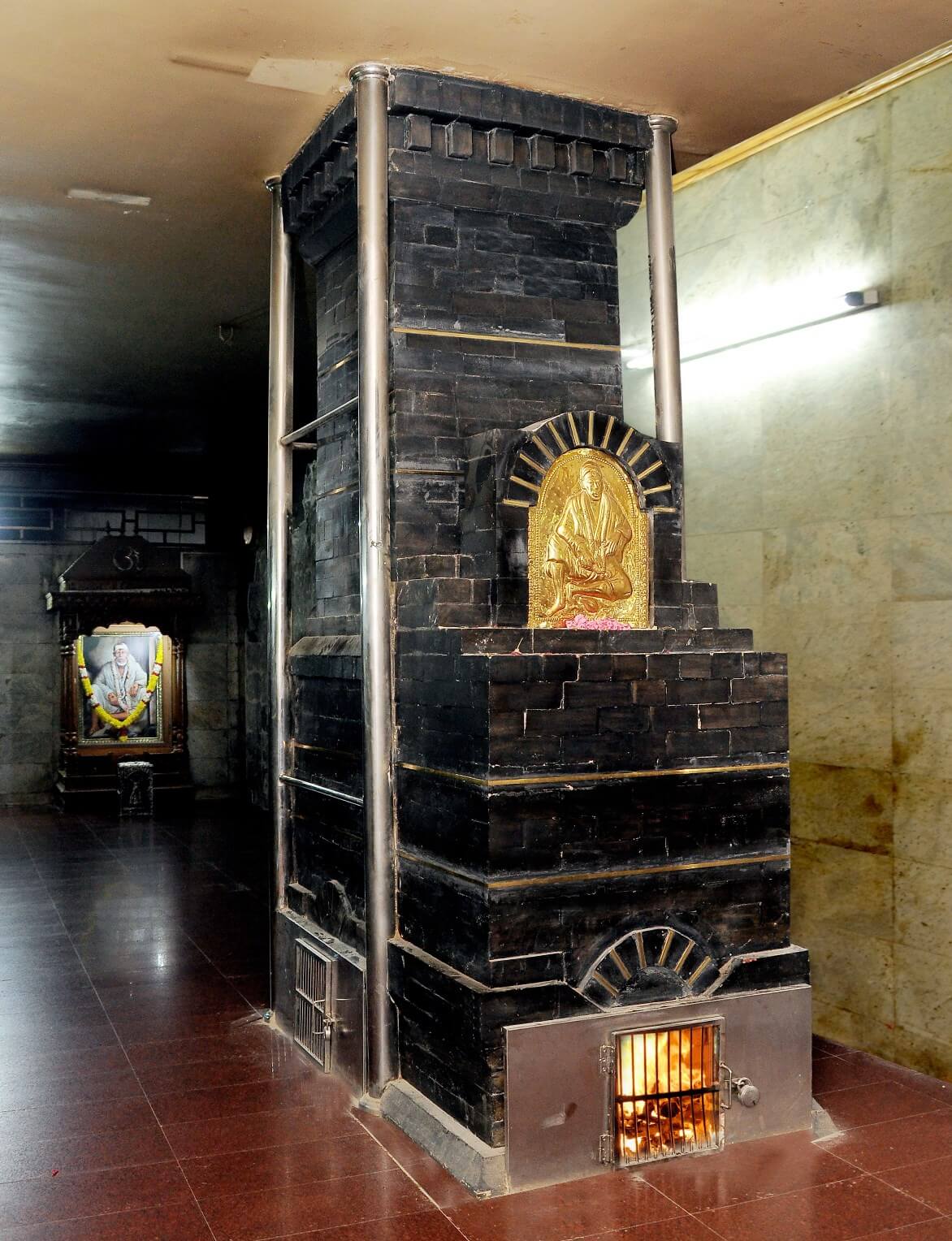
Dwarakamayi
To devotees of Shri Shirdi Sai Baba, Dwarakamayi is not merely a structure - it is among the greatest spiritual treasures of Shirdi, embodying the very essence of Baba’s message: tolerance, compassion, acceptance, and unconditional welcome to all. It was here that Shri Sai Baba lived for nearly sixty years of His life in Shirdi, transforming an old mosque into a sanctuary of divine grace, spiritual solace, and universal love. People of all faiths and backgrounds were freely welcomed, reflecting Baba’s profound reverence for the unity of religions.
Sai Baba Himself declared that merely stepping into Dwarakamayi confers blessings, a truth affirmed by generations of devotees through their own lived experiences. In a uniquely tender expression of divine love, Baba referred to the mosque as a mother and proclaimed:
“Dwarkamai is this very mosque. She makes those who ascend her steps fearless. This Masjidmai is very kind. Those who come here reach their goal!”
At the heart of Dwarakamayi lies the Dhuni, the ever-burning sacred fire so intimately associated with Sai Baba. Lit by Baba Himself, the Dhuni represents a Yajna (sacrificial offering to Agni) - symbolising purification, spiritual transformation, and divine grace. For countless devotees, it remains the living spiritual heart of Dwarakamayi, continuously burning since Baba first kindled it.
From this sacred fire emerges Udi (holy ash), regarded by devotees as one of Baba’s greatest blessings. The Udi symbolises the destruction of impurities, the transient nature of worldly life, and the grace that protects and heals. Sai Baba lovingly distributed it to devotees to relieve suffering, cure ailments, and offer spiritual assurance, making it a powerful symbol of His boundless compassion. Thus, the Dhuni is not merely a sacred fire - it stands as a living symbol of divine protection, purification, and Baba’s ceaseless grace.
The Dwarakamayi at the All India Sai Samaj carries the same sacred significance for devotees in Chennai. The Dhuni here was reverentially brought from Shirdi in 1968 and has been kept perpetually burning ever since, preserving an unbroken spiritual link with the holy Dwarakamayi of Shirdi and continuing to bless generations of devotees who seek Baba’s grace.
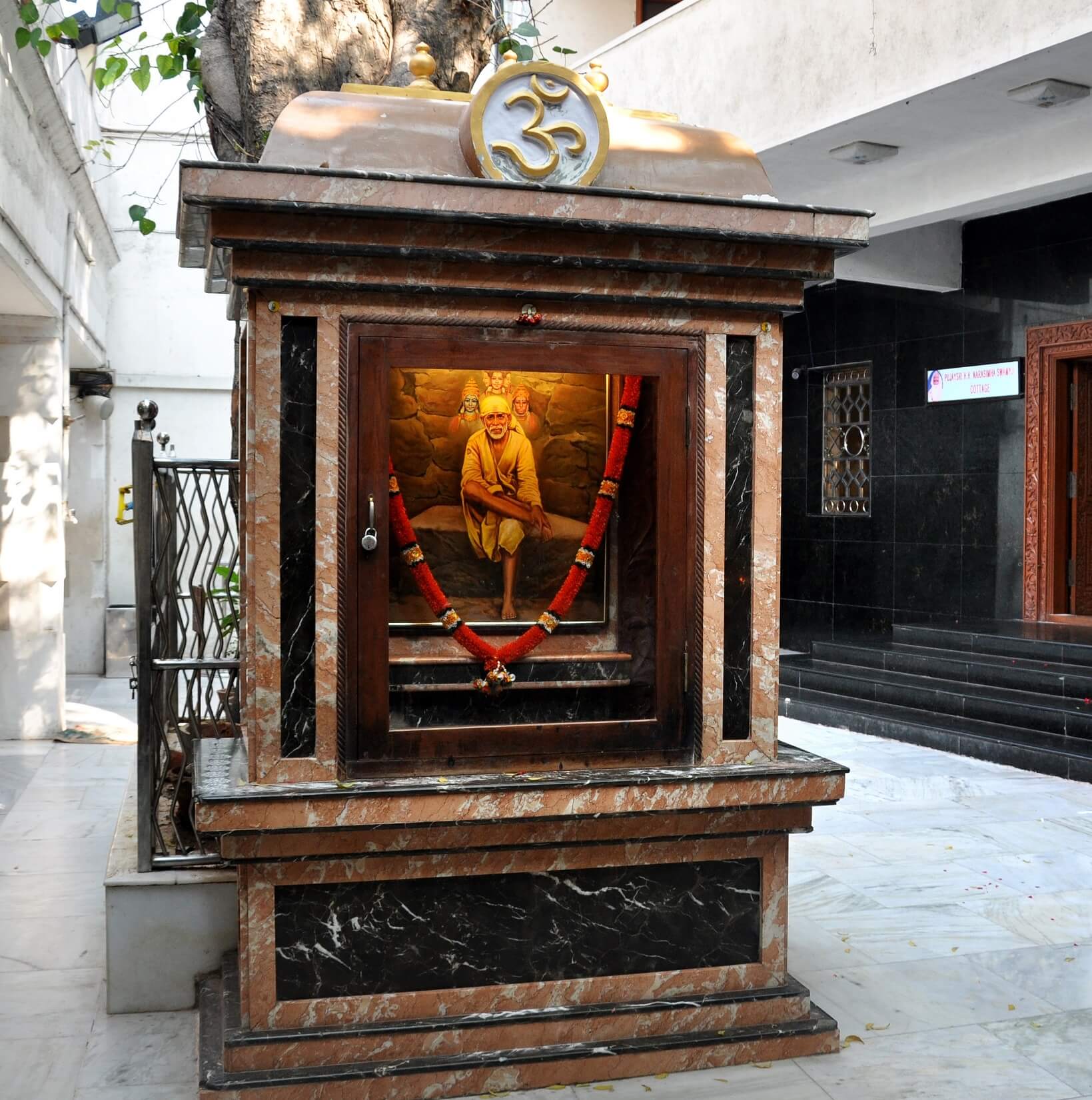
Gurusthan
The term Gurusthan literally means “the place of the Guru.” In Shirdi, Gurusthan is regarded as one of the most sacred and spiritually significant sites, deeply associated with the early presence of Shri Shirdi Sai Baba. It was here, beneath the sacred Neem tree, that Sai Baba was first seen as a young ascetic absorbed in spiritual austerity. Baba later revealed that this place was not merely where He had resided, but also the resting place of His own Guru, instructing devotees with great reverence:
“This was the site of the Guru’s tomb, and it should not be disturbed.”
In 1912, the sacred Padukas (holy footprints) were installed at Gurusthan by devoted followers such as G. K. Dixit and Sagun Meru Naik to commemorate Sai Baba’s early stay beneath the Neem tree. Reverentially brought in procession from the Khandoba Temple, Baba Himself sanctified them by touching them and declaring them to be “the feet of the Lord.” The Padukas were thereafter installed beneath the Neem tree, forever marking the sacred seat of the Guru.
In reverent remembrance of this sacred origin, the All India Sai Samaj recreated the spiritual essence of Gurusthan within its own premises. A divine portrait depicting Krishna–Rama–Siva–Marutyadi Rupa Sai - expressing Sai Baba as the embodiment of multiple divine forms - was relocated from the front hall and installed within a niche beneath a Neem–Aswatha tree in the Samaj premises. In front of the portrait, a pair of silver Padukas of Baba was installed for worship, and this sacred space came to be revered as the Gurusthan of the Samaj.
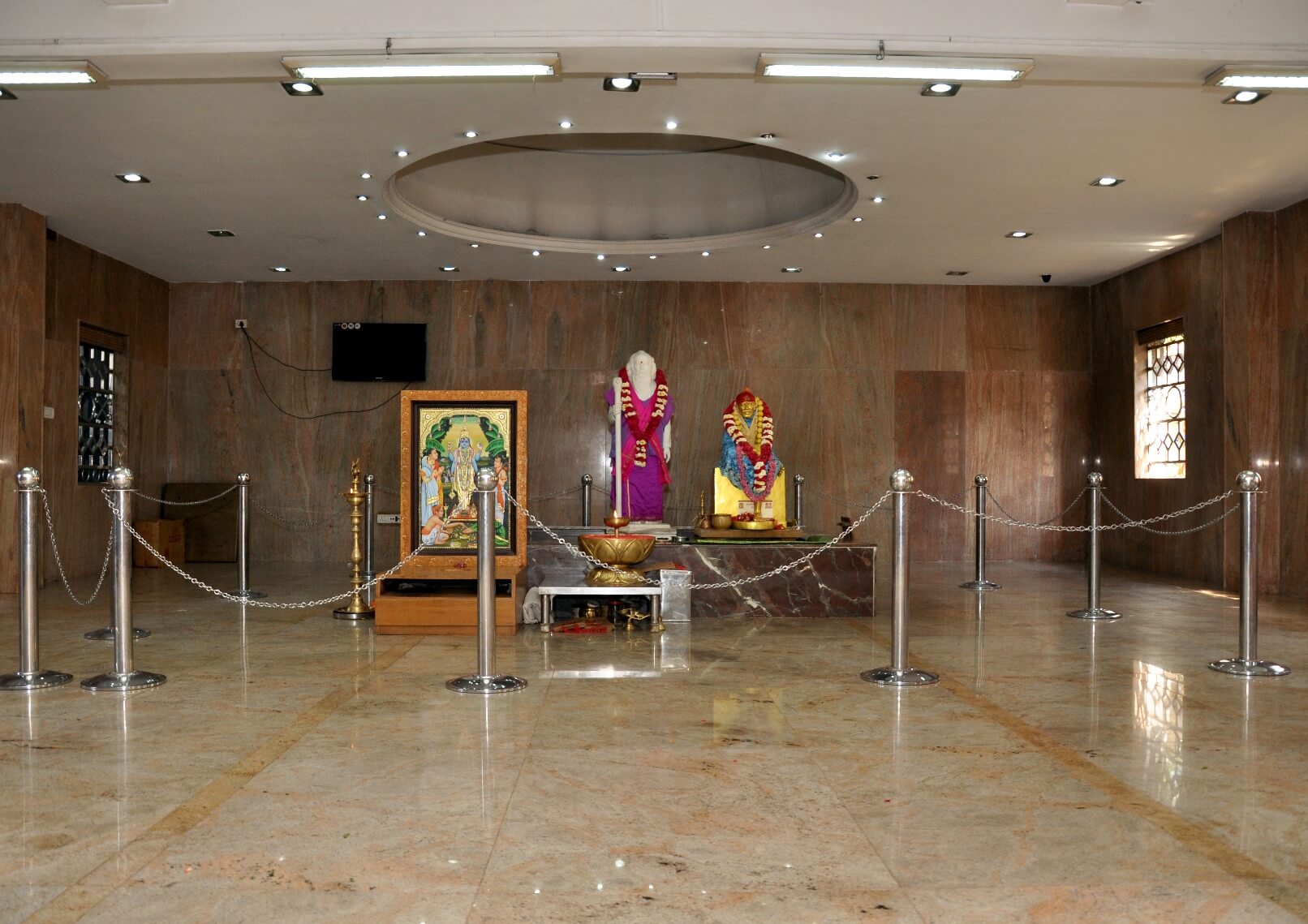
Swamiji Cottage
From its very inception, the All India Sai Samaj has been founded upon a clear spiritual vision: that the Sai movement must remain rooted in authentic spiritual guidance, devotion, and selfless service. Central to this vision is the conviction that the spiritual headship of the Sai movement is of paramount importance, and that none among the members could fulfil this sacred role in the manner of the founder himself. Accordingly, Shri Narasimha Swamiji is regarded as the spiritual head of the Samaj and of Sai devotees, whose guidance transcends physical limitations.
In reverent remembrance of its Founder-President, His Holiness Shri Narasimha Swamiji, and in keeping with this enduring spiritual ideal, a cottage was constructed in 1971 and dedicated to Swamiji. More than a memorial, it symbolises his continuing presence as the “permanent and always present guide, director and helper” of all who seek Sai Baba’s path through the Samaj.
This principle remains not merely an institutional sentiment, but a defining spiritual ideal of the Samaj - that every activity, every act of service, and every major undertaking remain anchored in Swamiji’s guidance and Sai Baba’s grace.
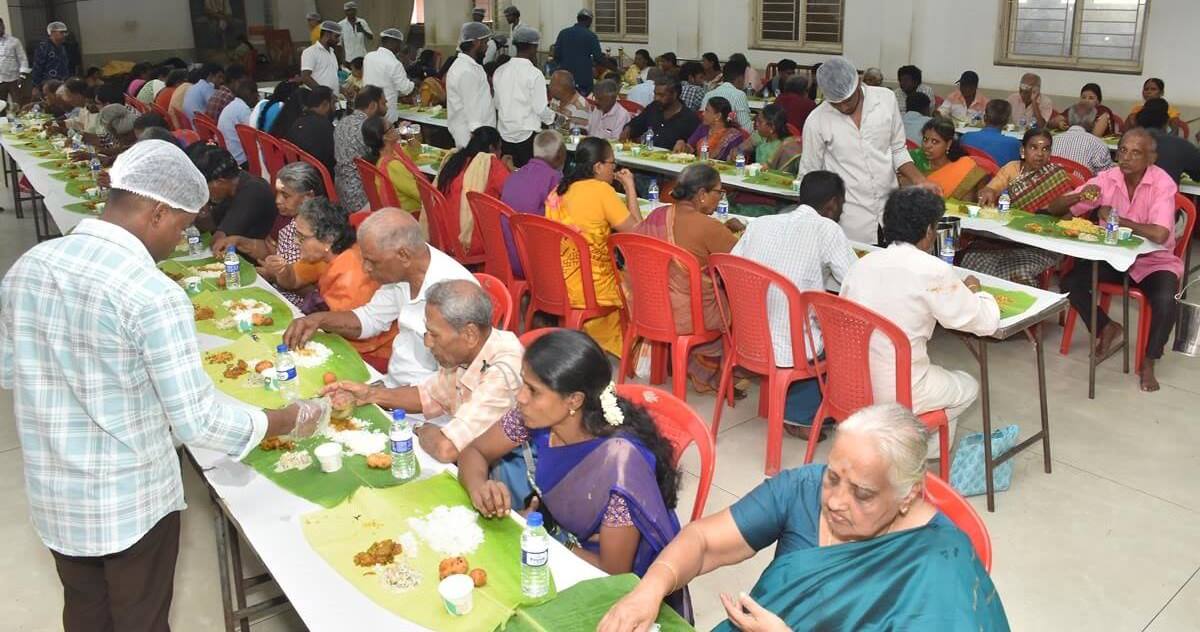
Annadana Hall
The Annadana Hall is dedicated to the sacred service of offering food to devotees and visitors, reflecting the timeless values of compassion, kindness, and selfless service.
Annadanam is considered one of the highest forms of charity and spiritual service in Indian tradition.